
AI ADVISORY FOR SMALL AND MIDSIZE BUSINESSES
The hard part isn’t using AI.
It’s deciding where it belongs.
Your team has probably already started. What’s missing is a decision about where AI actually helps your business, what’s safe to try, and how you’ll know whether it worked. That’s the part I do.
25 years leading B2B marketing teams. Now advising small and midsize businesses across construction firms, home builders, field service companies, marketing organizations, and many more on where AI earns its keep.

AI ADVISORY FOR SMALL AND MIDSIZE BUSINESSES
The hard part isn’t using AI. It’s deciding where it belongs.
Your team has probably already started. What’s missing is a decision about where AI actually helps your business, what’s safe to try, and how you’ll know whether it worked. That’s the part I do.
25 years leading B2B marketing teams. Now advising small and midsize businesses across construction firms, home builders, field service companies, marketing organizations, and many more on where AI earns its keep.
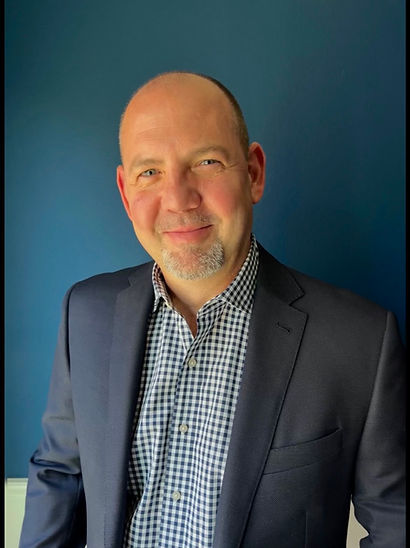

Your team is already using AI. But nobody has decided anything.
Ask around your company and you’ll find people using AI right now. Their own accounts, their own methods, whatever they figured might help. There’s no approved tool list, no rules about what data goes where, and nobody checking what comes back out.
That isn’t a discipline problem. It’s what resourceful people do when nobody has given them a path.
01
“We don’t know where to start.”
You’ve read the articles and watched the demos. Turning that into a real next step for your business is a different problem, and it isn’t anyone’s job.
03
“We tried it. It was hit or miss.”
Somebody experimented. Some of it was impressive. Some of it was wrong, or off-brand, or took longer to fix than to do. Now there’s more doubt than momentum.
02
“We don’t have any rules.”
No approved tools, no data guidelines, no review standards. You suspect people are already using AI on work that matters. You’re not sure what they’re putting into it.
04
“We can’t tell if it’s working.”
Something is probably saving time somewhere. You can’t point to it, can’t measure it, and can’t defend spending more on it.
None of this makes you behind. It’s where almost every growing business is right now.
What AI won’t fix
AI will not fix behavior. If people aren’t responding to clients, that’s a management conversation, not a software one.
AI will not fix bad data. It will produce confident answers from bad inputs, faster.
AI will not fix a broken process. It will run the broken process faster and make the cracks more obvious.
I say this early because it comes up in almost every first conversation. Sometimes what a business wants and what a business needs are two different things. Saying so at the start saves everyone money.
Who I work with
“I work with businesses where the owner still knows everyone’s name, and where the answers still live in a few people’s heads.”
Usually somewhere between 10 and 300 people, though the structure matters more than the number. Construction and the trades, home building and remodeling, field services, professional services, marketing organizations, and more. No matter your industry, I can help you build AI fluency across your organization.
You’re past “should we.”
You’ve stopped debating whether AI matters. You need to know how, specifically, inside your business, without betting the year on it.
Your team is willing but unsure.
There’s curiosity and some early experimenting, but no shared approach and no clear sense of what’s allowed.
You need something you can show someone.
A partner, a bank, a board, or yourself. Not a good feeling about it. Numbers.
Four questions, in this order
Most AI projects start with a tool and work backward to a reason. I go the other direction. These are the four questions your business has to answer, and the order matters more than people expect.
Where’s the friction?
Before anything else, I find out where time, money, and margin are actually leaking. That means talking to the people doing the work, not surveying leadership. In almost every business I’ve worked in, the answer turns out to be somewhere nobody expected.
Where’s the friction?
Which tools are approved. What data can go where. Who reviews what before it leaves the building. This isn’t paperwork for its own sake. It’s what lets people stop guessing and start working.
Does it actually work here?
We rebuild a small number of real workflows and run them on real work. Your team, your files, your numbers. If it doesn’t hold up, you find that out in weeks instead of quarters, and it costs you very little to have asked.
Who else can do this?
This is where training belongs, and not before. Once something works, we spread it so it isn’t trapped with one person. That’s the difference between a team that uses AI and a business that has the capability. For most clients this is also where we keep going together, reviewing what’s working month to month and building the next thing.
What it actually looks like
Everyone I train keeps a journal. Every time they use AI, they log what they did, roughly how much time it saved, and what they learned. Their words, their time, not mine.
These are real entries. Names and companies removed. Everything else exactly as they typed it.
Helped me tremendously and I was working on figuring it out on my own without having to ask for help
JUNIOR ESTIMATOR
CONSTRUCTION COMPANY
I learned that Claude can take 3 separate set of plans and break it down to help look for details I was struggling to find or didn’t realize were there! extremely helpful
SENIOR ESTIMATOR · CONSTRUCTION COMPANY
I’ve learned AI is my friend not my enemy!
JUNIOR OPERATIONS MANAGER · CONSTRUCTION COMPANY
Makes me sound more professional through email and I appreciate that
PROJECT MANAGER · CONSTRUCTION COMPANY
Claude found a few minor tweaks for me to correct. My manager had no additional notes once I submitted the project for review.
[EDITED] SENIOR ESTIMATOR CONSTRUCTION COMPANY
I asked Claude to create a Termite Activity Map similar to a weather Map that I can update daily
OPERATIONS MANAGER · PEST CONTROL COMPANY
i built an agent to auto deliver weekly podcast options for me to share with the team
OPERATIONS · PEST CONTROL COMPANY
We are looking at doing an acquisition of another company. The new company has a different geographic footprint than us so I wanted to visually see their customer concentration on a map. I had Claude help me create it. I am a visual person so being able to see the customer footprint helped me tremendously!
OWNER · PEST CONTROL
COMPANY
It identified 902 URLs that were no longer active. This saved me countless hours of manual work and untold amount of Ad spend on targeting inactive URLs unintentionally.
DEMAND GENERATION LEAD · B2B MARKETING TEAM
I created a workflow to help me compare webpage content about similar services from two different companies. I then asked it to merge the content into one and optimize. This workflow can be tweaked to help us move more quickly on a future initiative, potentially saving upwards of 40-60 hours.
MARKETING MANAGER · CYBERSECURITY FIRM
What’s cool is I can tweak this workflow over time so it’s constantly evolving and improving.
Digital marketing manager · Cybersecurity firm
I learned that AI can compile a lot of information quickly but I need to provide very specific direction. Also, not everything provided is necessarily correct.
MARKETING MANAGER · B2B MARKETING TEAM
THE ONE THAT DIDN’T WORK
it didn’t save me anytime because Claude can’t figure it out. maybe i dont know how to work claude, but i asked it how to do it and it didn’t know either
SALES · PEST CONTROL COMPANY
⦿ RYAN’S RESPONSE
I saw that entry the week he wrote it. I called him, we got on a screen share, and worked through what he was actually trying to do. Some of it was how he was asking. Some of it was a thing the tool genuinely couldn’t do. We sorted out both.
That entry is on this page on purpose. The journal isn’t there to make me look good. It’s there so I can see who’s stuck before they quit.
What it’s worth
Hours saved is the easiest thing to count and the least interesting thing to talk about. Here’s what actually shows up.
Margin
An estimator pulled the evidence out of a set of specs and drawings to establish which party owned a design responsibility, then built the change order around it. On a marketing team, a demand generation lead validated an 11,000-account target list and found 902 dead URLs that had been quietly absorbing ad spend.
mistakes
Work reaching the senior reviewer already clean. One estimator started running a full review of his own bids before submitting them. His manager came back with no notes.
Capability that stays
A junior estimator working through calculations himself instead of interrupting the person who’s been doing it for fifteen years. A marketing manager building assistants she reuses every month instead of starting over every time.
Time
A seven-person marketing team logged 210 hours saved across an eight-week engagement. Individuals report 10 to 24 hours a month on specific recurring tasks.
HOW I COUNT IT
Every number here comes out of client journals, logged by the person doing the work rather than estimated by me. For the marketing engagement, we valued the hours using a blended rate their own executive supplied. I’ll walk you through the arithmetic on a call if you want to see it.

Why I do this
I spent 25 years leading B2B marketing teams, and I’ve watched a lot of technology arrive with a lot of noise attached to it. This one is different, not because the tools are magic, but because it changes how the work actually gets done.
When I went deep on it, I expected to become a trainer. That’s what the market seemed to be asking for. What I found instead was that most small and midsize businesses don’t need a training program first. They need someone to help them decide what’s worth doing at all, and to tell them the truth when the thing they’re asking for isn’t going to work.
That’s the job. I’m not here to sell you on AI. I’m here to help you figure out where it belongs, prove it in your own work, and make sure the capability stays after I’m gone.
FOUNDER, CLEAR PATH ADVISORY
Start here
Everything starts with a conversation. Thirty minutes, no charge, no pitch. Tell me what’s going on and I’ll tell you honestly whether I can help. If I’m not the right fit, I’ll say so and probably point you somewhere better.
THE FRICTION AUDIT | $3,900
I spend time inside your business, talking with the people doing the work and looking at how work actually moves through it. You walk away with a clear, prioritized picture of where AI will help you, where it won’t, and what to do first.
Fixed price, no scope creep. If you engage me for further work, half of this investment ($1,950) is credited toward it.